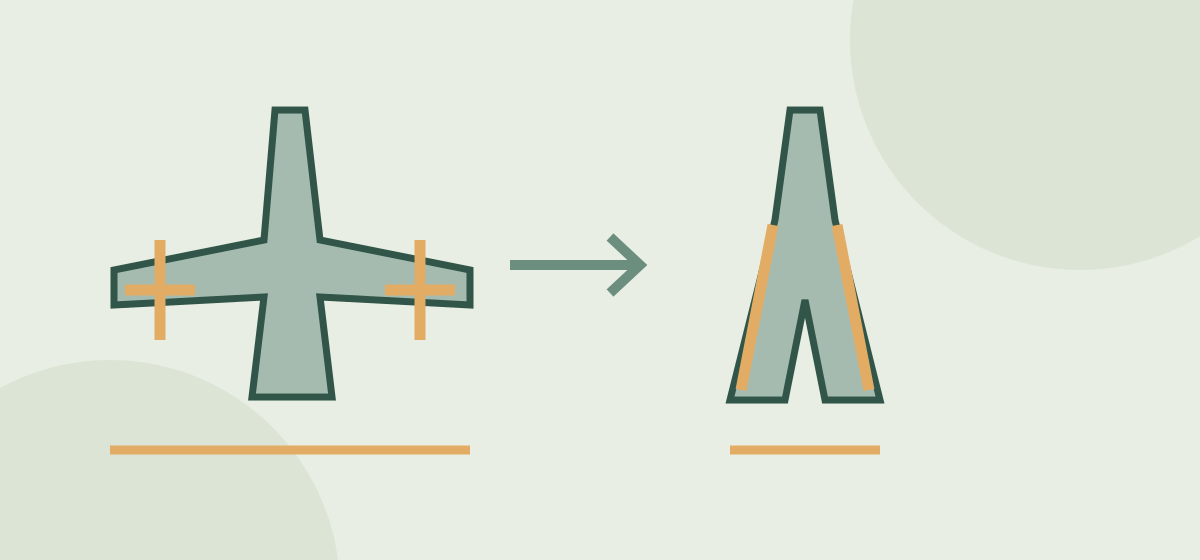
The rotor blades fold inward. Then a much larger piece moves: the V-22’s wing turns over the fuselage. It looks like an aircraft packing itself away. That is close to the purpose. The operation changes the footprint of a machine that must fit on a ship as well as fly.
Blade folding and wing stow solve different problems
NAVAIR describes the wing-and-rotor fold system as reducing the MV-22’s footprint for shipboard use. Folding the blades brings in the large rotor outline. Turning the wing aligns the long wing assembly with the body instead of leaving it spread across the deck.
Watch the airframe, not just the blades
Use the fuselage as a fixed reference. In a folding sequence, distinguish movement of the rotor blades, the engine nacelles and the wing assembly. Otherwise, several mechanisms can blur into one impressive-looking transformation.
A simple paper exercise makes the geometry easier to see. Place a long narrow strip across another strip to form a cross. Rotate the top strip until the two point in the same direction. No material has disappeared, but the bounding outline has changed. This is a footprint analogy, not a model of the V-22’s structure or operating procedure.
The joint has a real structural job
A NAVAIR maintenance report identifies the stow ring as a key part of the system and describes the engineering work involved in replacing it. That matters because the mechanism is not just a convenient hinge added to an otherwise complete aircraft. Moving and supporting a wing requires a designed load path, alignment and inspection.
An earlier NAVAIR delivery report also documented the aircraft in blade-fold/wing-stow configuration. Together, the accounts support treating the shape as a designed storage configuration rather than a damaged or partly dismantled aircraft.
Tilting the nacelles for different flight modes is not the same operation as stowing the wing. A short video also cannot verify locking, hydraulic condition or readiness to fly. Exact sequencing and safe operation belong to authorized procedures, not a visual explainer.
Why this is a useful engineering scene
The design has to satisfy more than one setting. A broad arrangement is useful in flight, but a compact outline is valuable when machines share limited storage space. The folding sequence makes that compromise visible: the aircraft does not become smaller in every sense; it becomes easier to arrange in a particular place.
Sources & further reading
References checked 2026-09-10. This is an adapted English edition, not an endorsement by the cited organizations.
Watch the original scene · English-language clip
Open on YouTube ↗Something needs correcting? Contact the editorial desk with the article URL and supporting evidence.


